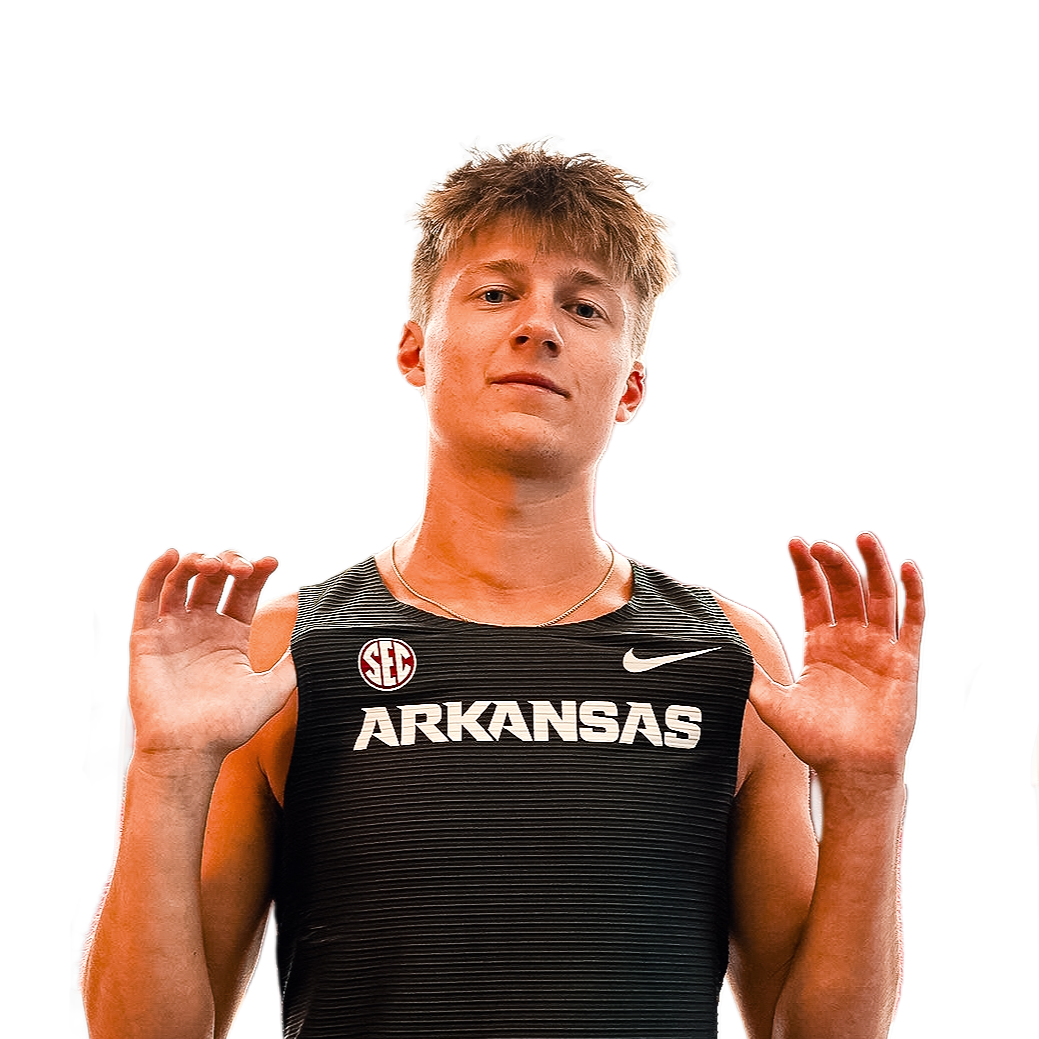
The Bryan Clay Invitational is the biggest track meet in the world. Over 5,000 athletes from 400 different schools descend on one track in California, and the fields are so loaded that your seed time means almost nothing. NCAA champions, All-Americans, and professional runners all share the same infield. I flew across the country just to be in this race and this is how it went.
Getting There
Travel day started before 5am. We were on the bus to the airport before most people’s alarms go off, and I had somehow managed seven hours of sleep the night before, which felt like a small miracle given what the day before looked like. I was up at 6:30am for our first workout, couldn’t get to breakfast until 9:30, then had to sprint back to my apartment to make a 10:30 class, then an 11:30, then homework during lunch before a 1:30-to-3:30 lab. After that a Zoom meeting with my video producer from 3:30 to 4:30, then my double workout — 45 minutes on the elliptical — then packing, dinner, and then I rescheduled a lab that was supposed to be the next day for that night, 7 to 10pm. We got done at around 9pm. That was the day before a cross-country travel trip to compete at the biggest meet of my life.
Two flights, a layover in Dallas, a broken tram, and we were in California. The team drinks two bottles of water per hour on flights trainer’s orders which means the entire distance squad was cycling through the airplane bathroom constantly. We got to the hotel that night and settled in.
California Workout
The afternoon after we arrived we did an eight-mile shakeout, then the following morning we found a dirt track nearby where they were kind enough to let us use it. The workout was light — two by three minutes at tempo, then a short fartlek nothing hard, just keeping the legs moving. I switched into Vaporflys for it. We ended up having to switch tracks halfway through, finished the fartlek, cooled down, and I doubled with three easy miles.
The rest of the trip between workouts and the race is something most people don’t see in these vlogs: a lot of sitting in a hotel room. No car access, so you’re stuck with whatever’s walking distance unless you’re willing to pay for an Uber. I got ahead on editing this video, knocked out homework, and visited a friend who goes to school out there. We also got a poker game going. Pretty standard travel trip, honestly.
A Problem the Night Before
I went to bed the night before the race with a pounding headache. I figured it was caffeine withdrawals since I’d been cutting caffeine in the days leading up to the race something I always do before a big one. But I woke up with my whole body tingling and feeling genuinely sick. Sore throat, head still pounding, body not right. That’s not the way you want to feel 36 hours before you race at Bryan Clay.
I came down for hotel breakfast and tried to shake it off. By race day morning I was still feeling rough but noticeably better. The team got me some meds, knocked the headache back, and I told myself it was something I could work through. Six hours out from the race, I ate my lunch and started thinking through what I needed to do.
The Race Plan
Despite being sick, this was the most prepared mentally I had felt for a race all year — probably since high school. My first two races of the outdoor season had each taught me something real.
Race one: a home 1500m where I focused on sticking to moves, closing gaps, and staying coachable. The problem was I put myself in dead last from the gun, so all the moves I was covering and all the gaps I was closing were from 13th to 14th place. I executed the mentality but sabotaged myself with positioning.
Race two: an 800m at Long Beach two weeks later. I came out in second place and held that position until about the last 150 meters, when I blew up. But I learned that I could get myself in a good position — and that my strength carries over a longer distance anyway. The 800 isn’t my race. The 1500 is.
So the plan for Bryan Clay was to combine both lessons: get in a good position early, cover moves, and race to win rather than race to survive. The thinking was that if you win the race, a PR is going to come with it. I was hoping to see something around 3:46.
The Race
Three pacers in the field DBU, Drury set the tone immediately. The first 400 split came through at 59 seconds, which the announcer called tied for the fastest first 400 they’d seen all day. Right around 500 meters I moved up and slid past one of the pacers. By 800 meters, the announcer was calling it as me leading — Trenton Sandler of LSU — with Graham McLean of UC Santa Cruz on my outside shoulder, leading into the final one-and-a-half laps.
It felt good through about a kilometer. Then it didn’t.
The last 200 meters was the most painful stretch I’ve run. The field came back through me and I finished last in my heat. I went from leading the race to watching everyone go by in the final 500 meters. Standing there after the finish, the honest words were: that sucked.
What I Took From It
After a few hours to think, I could find real positives — not the fake kind where you spin a bad race into something it wasn’t.
The mental space I was in going into that race was the best I’d had in a long time. I was calm, locked in, and confident. And because I was in that space, I actually did the thing I set out to do: I got myself into a good position early, which was exactly what I said I needed to fix coming out of race two. I executed the plan. I just ran out of gas — and I’m willing to chalk a big piece of that up to being sick and feeling like I was breathing through a straw for the second half.
The honest version is that I was leading at Bryan Clay for about half the race. That’s not nothing. It means the fitness and the mental framework are there. What I need to work on is pacing — not letting the adrenaline and the field pull me through a first K that I can’t sustain. Going dead last in a heat at Bryan Clay stings. But I know now what it feels like to be in the front of a race like that, and I know what fell apart. That’s something to build on.
We’ll be back.
Want More?
Follow along with my journey as a D1 distance runner, content creator, and entrepreneur. New content every week across YouTube, Instagram, TikTok, and this blog.